
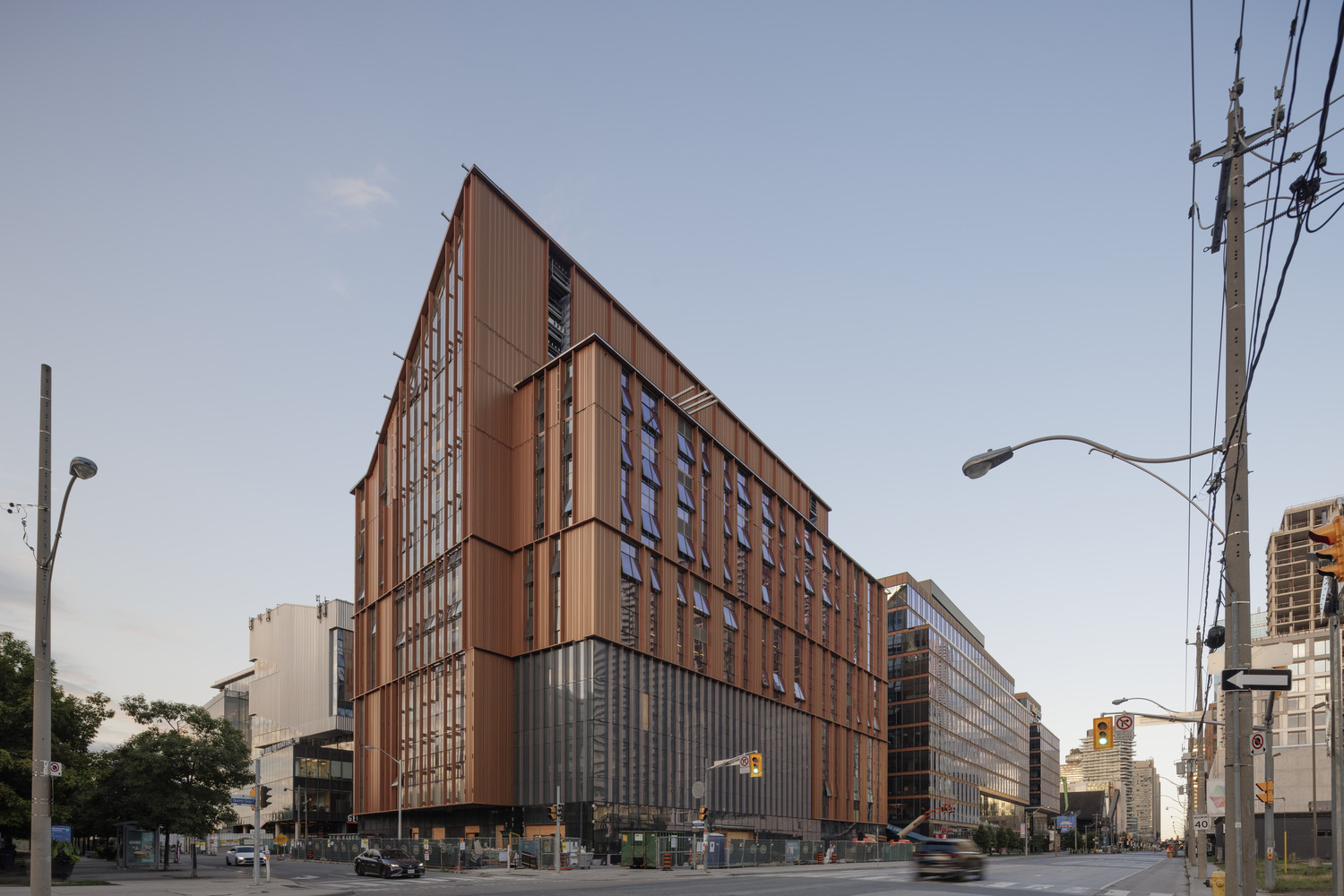
How do you design an inclusive environment for a diverse student body while exemplifying how architecture can embody the fullest expression of sustainability?
On the latest episode of the ARCAT podcast, Phil Silverstein, Partner, talked to Cherise Lakeside about the considerations that went into designing Limberlost Place, home to the School of Architectural Technology at George Brown Polytechnic. Listen to learn about the first 10-storey mass timber structure in North America, designing to attract a diverse population students, constructing with mass timber, pioneering research on new structural systems, and teaching through the form of a building.
The brief
When George Brown Polytechnic was drafting a design brief for their new building, the school studied the needs of both current and future students, and found that the existential crisis on everyone's mind was climate change. Important, too, was the ability to attract a diverse and talented body of students, demanding the need to design something truly special and unique that would entice bright minds to enrol at the institution.
The solution? Sustainability.
“One of the asks was that it had to be a demonstration building. We want this building to be a vehicle for learning, a vehicle for education. The building had to exhibit aspects that the students can learn from just by looking. That's why they wanted it to be a smart building. They wanted passive technologies. They wanted to push the envelope in mass timber and do something unique,” says Phil.
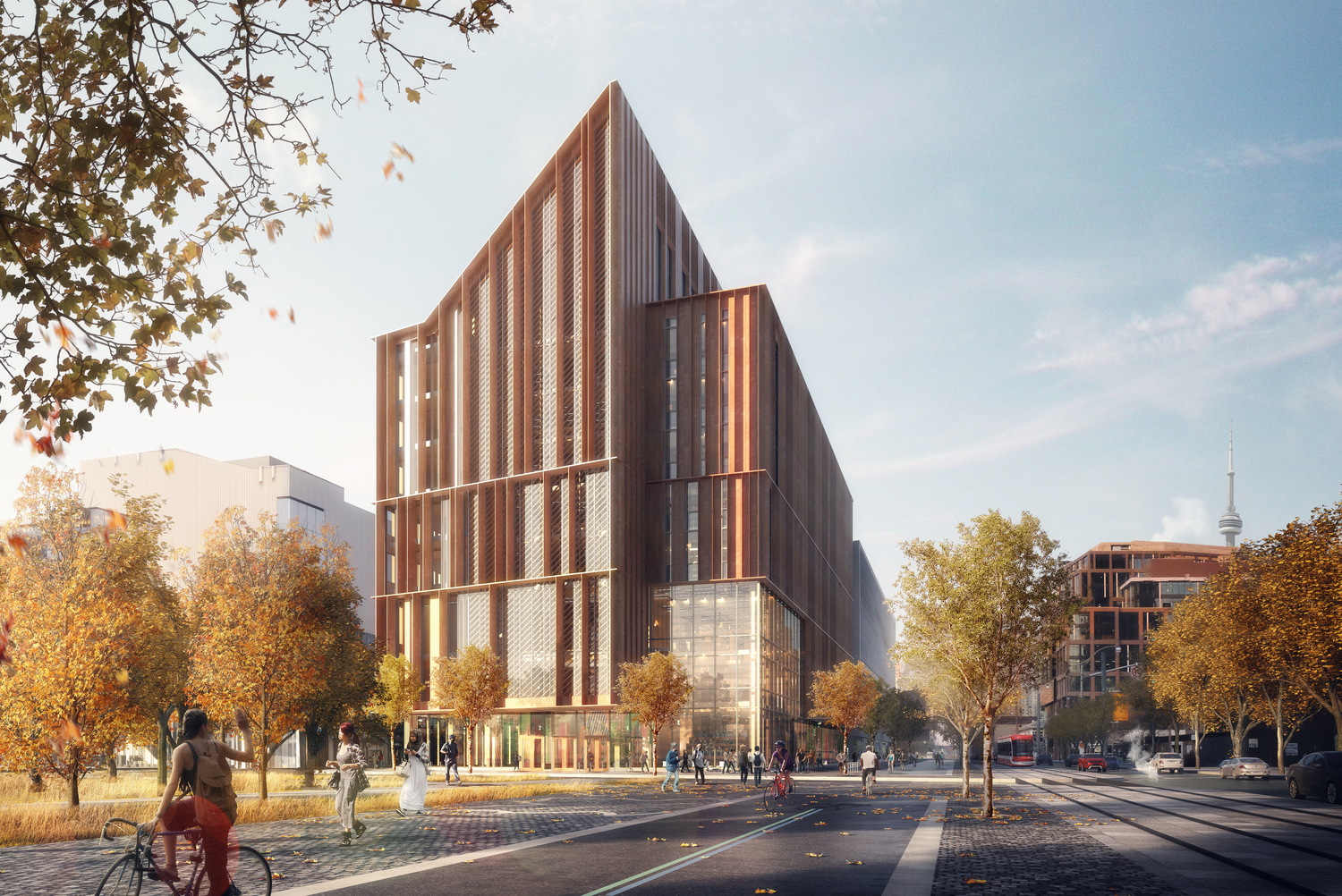
“It came down to them wanting to be leaders in the industry. If you're attracting talented students, a diverse group of students, you need to demonstrate that you're going above what the average educational facility would provide. They had a commitment to not just environmental sustainability, but financial sustainability. Sustainable buildings, by nature, operate on a lower budget. The mechanical systems are reduced. Your building envelope is tighter. You have better daylighting, so you reduce lighting loads. Colleges and universities are places of higher education that want to demonstrate that through their buildings. George Brown, in this case, took that leadership role.”
Embracing design constraints
For MTA, the challenge of designing with sustainable features became an opportunity to push the boundaries of what's possible.
“It was easy to say that you could be timber and flexible, but maybe you're not going to be timber, flexible, and net-zero. We decided that we were going to pick all of them. That's when we started to engage in a highly collaborative process to come up with some remarkable ideas about how to make a building that fit into but also stood out in Toronto, and one that made all of the sustainability features so visible and accessible that it could change the way people felt and thought about buildings,“ explains Carol Phillips, Partner.
“From the structural to the natural ventilation to the daylighting, to even the way we share knowledge, we wanted to make sure that everything we were doing could inspire others to try these new ways of building, because we need to. We need a low carbon future, and buildings are a huge part of the carbon formula.“
Understanding student needs
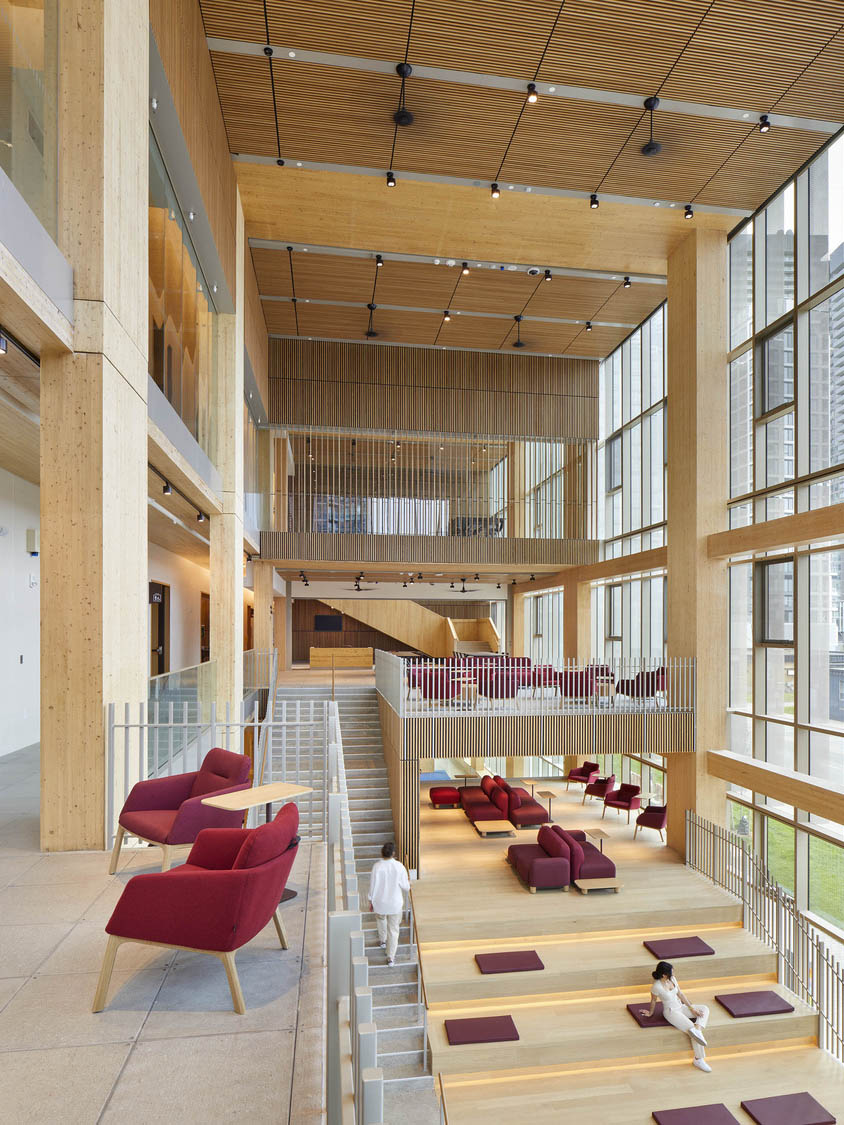
Every aspect of Limberlost Place was designed with the educational, social, and health needs of students in mind, with the understanding that physical and mental wellness facilitates academic success. On the first few floors, the feature stairs encourage different ways of sitting and gathering. While some will feel more comfortable congregating by the steps to discuss the latest results of an exam, others might prefer to be tucked into a corner for quiet reading. The exposed mass timber lends a sense of calm and stillness that one might experience while immersed in a forest, a quality of biophilic design.
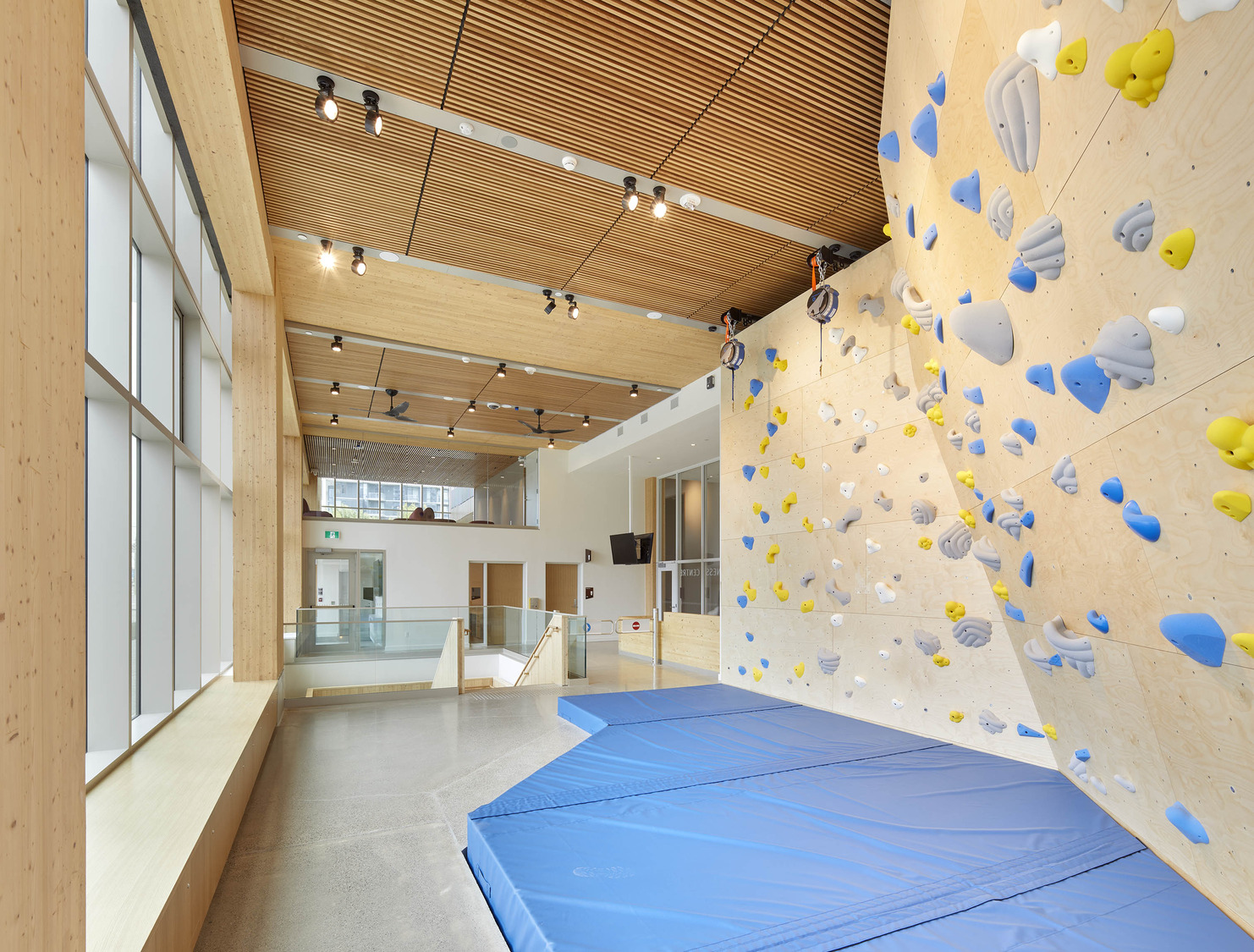
“Architectural students work late at night and need to let off some steam at three in the morning. There's a climbing wall in this building. There's a pickleball court, cardio and weight room in the lower level. There are auditorium spaces, a conference space, a faculty office on level nine. We sprinkled in other active spaces, like the event space, the daycare at the fitness centre. What makes the building really unique is how we wove social spaces throughout the full height of the building,“ Phil says.
Innovating a mass timber system
Given the building's primary purpose as a teaching space, the classrooms needed to be highly functional. This meant natural light, inspiring layouts, and a lack of columns to ensure clear sight lines for students. As such, a grid span of at least nine metres was necessary.
“Our engineers came up with what's called a timber concrete composite panel. It's a beamless system, and we did that in 18 inches. We bought ourselves another floor going with a flat panel system. The typical mass timber structure with deep beams feels dense, but as soon as you eliminate those beams, it just opens up the space. It allows your three-meter floor-to-floor to feel like a much more inviting, airy building."
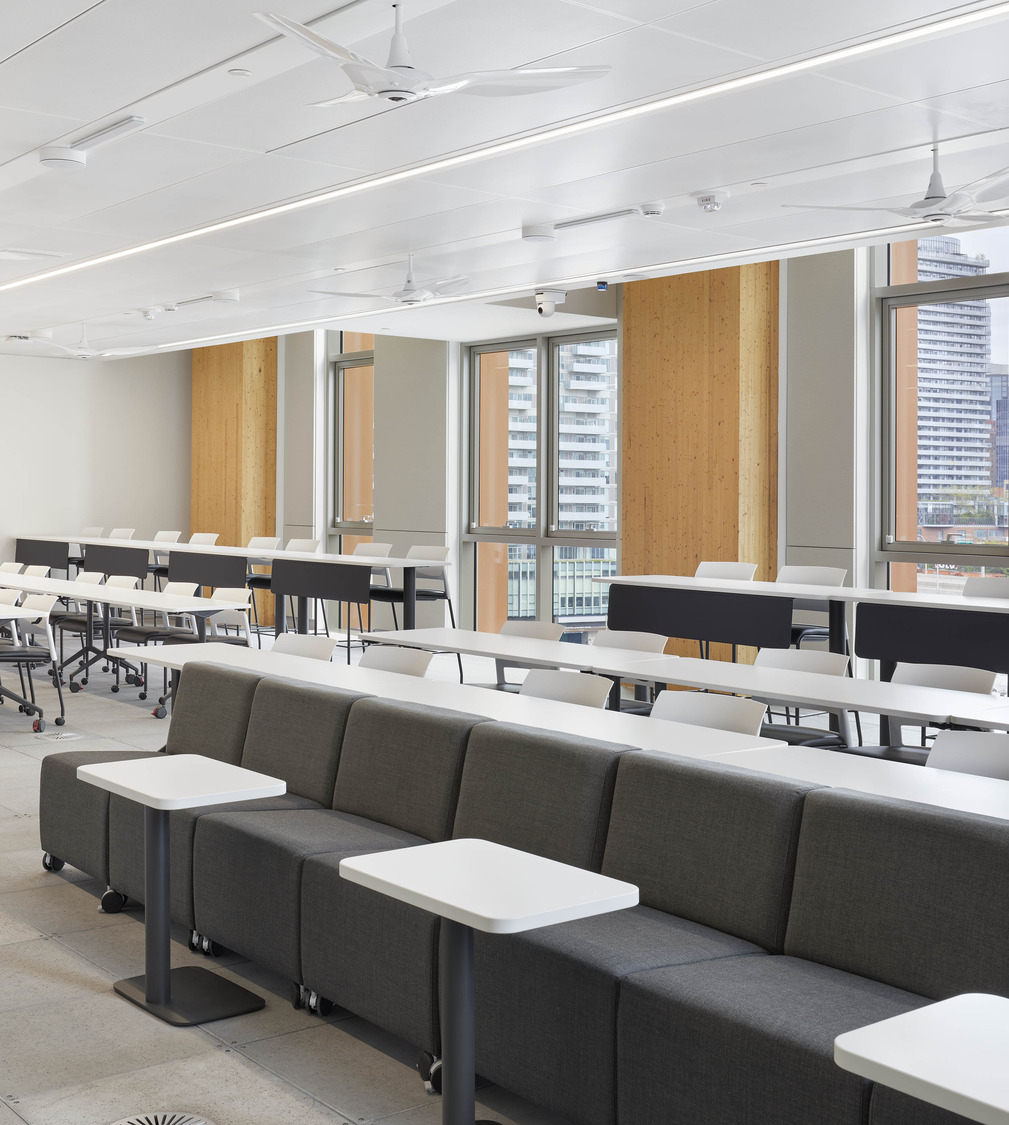
Through government funding and support, the innovation was heavily tested and implemented by engineers and contractors to analyze a wide variety of scenarios, as well as constructability and cost. Now, all the research and calculations are available in the public realm for others to iterate and utilize.
Engaging students and faculty in operations
In addition to the two solar chimneys that drive a passive ventilation strategy, the occupants are empowered to participate in sustainable practices. When conditions outside are pleasant, the weather stations on the roof—which detect temperature, humidity, wind speed, air quality—will inform the building's automation system and turn the thermostats green. Faculty members will receive a notification on their phones and the screen in the front lobby will state that it's a good day to open your windows.
By encouraging occupants to think about energy use, the building cultivates a sense of collective responsibility and demonstrates George Brown Polytechnic's commitment to a climate conscious future.