
When buildings are constructed and occupied, they produce long-lasting effects on the environment and the people who inhabit them. This includes the energy required to extract raw materials during the production stage, the lighting, heating and repairs during the use stage, and the demolition and disposal of the building during the end-of-life stage.
At Toronto Climate Week, MTA shared a post-construction Life Cycle Assessment (LCA) of Limberlost Place, providing insight into the environmental impacts of the building across its entire lifespan.
LCAs are typically conducted during the design phase to help project teams make informed decisions that reduce the carbon footprint of their buildings. This assessment, however, was undertaken after project completion, providing a unique opportunity to evaluate the embodied carbon of a building based on as-built conditions rather than design assumptions.
This assessment had two primary objectives:
- to quantify the embodied carbon of the as-built hybrid mass timber/steel structure relative to a baseline concrete structure; and
- to evaluate the embodied carbon of the prefabricated envelope panels compared to an equivalent site-built envelope.
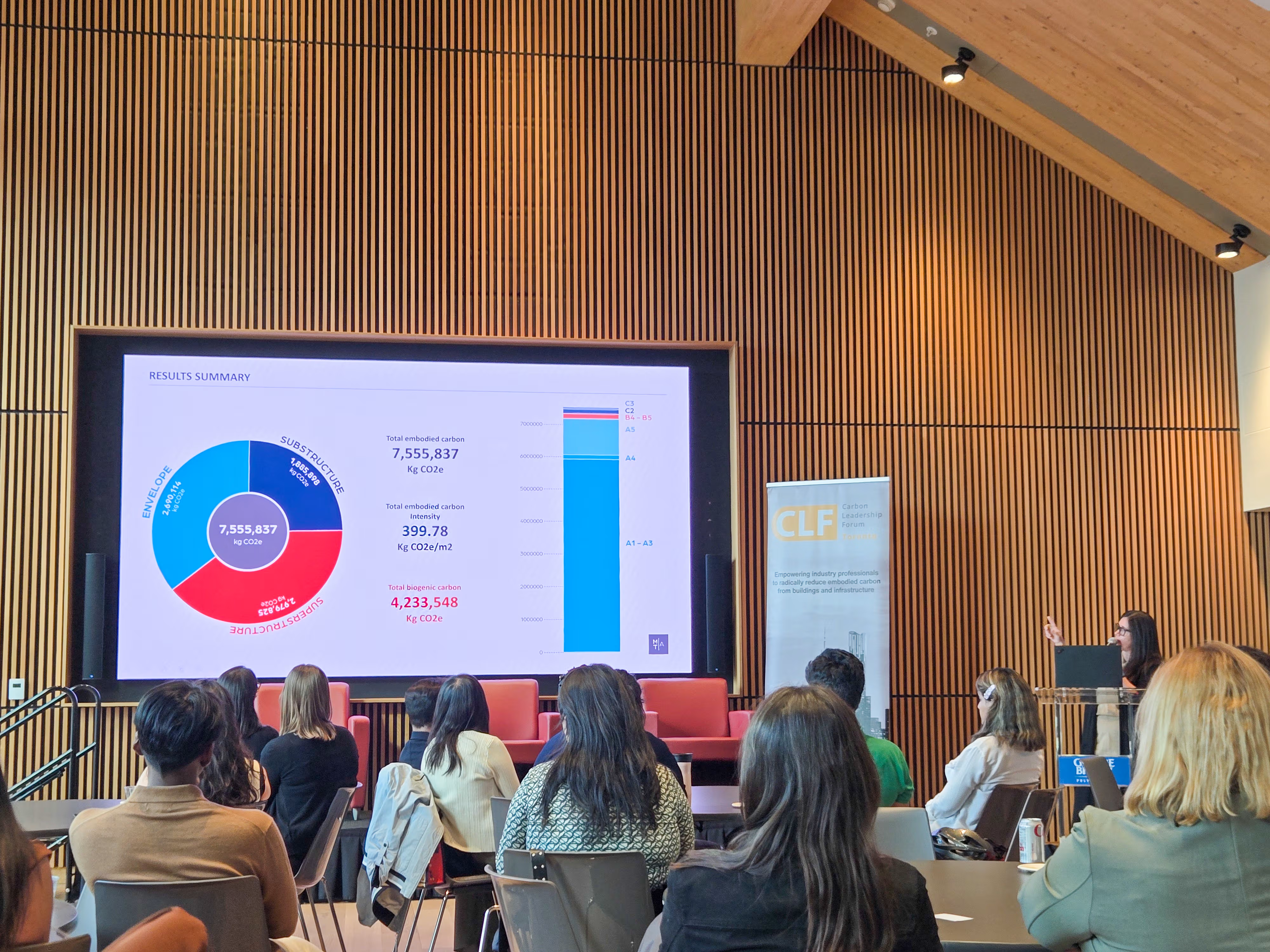
The results demonstrate that the hybrid steel and mass timber structure achieved a 32% reduction in embodied carbon compared to the concrete baseline. This reduction increased to 39% when the steel core was excluded from the analysis, with particularly noteworthy findings emerging from the individual column comparison.
The prefabrication analysis showed that the additional steel and aluminum framing required for the prefabricated panels contributed significant embodied carbon relative to an equivalent site-built envelope. However, the assessment also highlighted substantial gaps in industry data related to the embodied carbon of on-site construction processes. More comprehensive data in this area could help quantify the carbon benefits of prefabrication—such as faster installation, reduced site heating, and decreased on-site activity—allowing for a more balanced comparison.
Ultimately, the findings provide valuable lessons and insights into strategies for reducing embodied carbon in future projects.
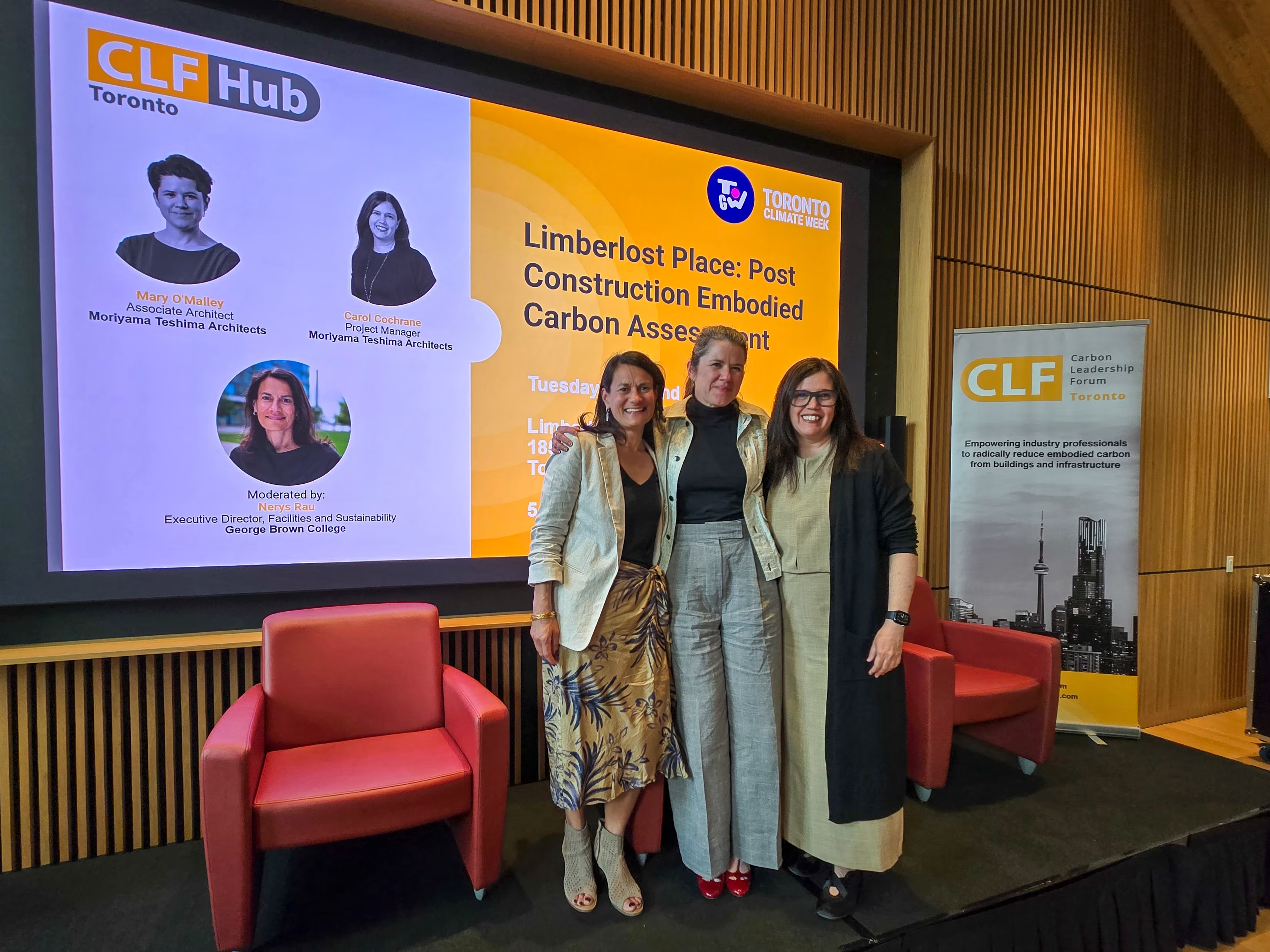
The talk was presented by MTA Associate Architect Mary O'Malley and Project Manager Carol Cochrane, moderated by Nerys Rau, Executive Director of Facilities and Sustainability at George Brown Polytechnic, and organized by Carbon Leadership Forum Toronto.
Read the full Life Cycle Assessment report for Limberlost Place.
To learn more about Life Cycle Assessments in general, visit the Carbon Leadership Forum site.